Showing posts with label e-liquids. Show all posts

Saturday, August 8, 2015

Trace Amounts of Tobacco-Specific Nitrosamines Found in E-Liquid But None in Aerosol

second generation e-cig
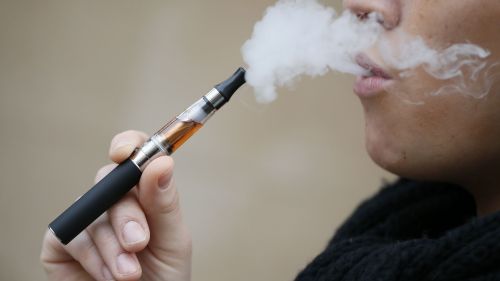
The researchers used a second-generation e-cig that probably looks like this.


It's great to see the Greeks are winning the battle in electronic cigarette research. Doctor Farsalinos and his formidable team are once again kicking pro-tobacco propagandists' butts with their latest findings.

Here's how they did it...

First, the team selected three brands of e-juices from the market. They prepared testing samples in their liquid and aerosol forms and checked them for levels of tobacco-specific nitrosamines (TSNAs).

Three 100-puff sets from each liquid were trapped in filter pads and were subsequently analyzed for the presence of TSNAs. The expected levels of TSNAs (calculated based on the liquid consumption) were compared with the measured levels in the aerosol.
Next, the researchers prepared a control sample of flavored e-juice and deliberately added a cocktail solution of known nitrosamines to it.

Farsalinos and his team measured the levels of N-nitrosonornicotine (NNN), N-nitrosoanatabine (NAT), N-nitrosoanabasine (NAB), and 4-(methylnitrosamino)1-(3-pyridyl)-1-butanone (NNK) (if found) in each e-juice, including the spiked sample. Thousands of carcinogens are found in tobacco smoke, but these four were likely chosen because they have clearly identifiable markers that make them particularly easy to find and measure.
nitrosamine chart
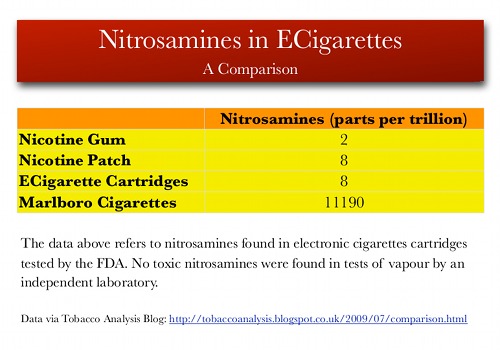
Here's a quick rundown of the levels of nitrosamines found by the FDA in nicotine gum, nicotine patch, e-cigarette liquids, and analog cigarettes. Image via The Ashtray Blog.

And, this is what the researchers found out...

Only NAB was found at trace levels in two commercial liquids (1.2 and 2.3 ng/g), while the third contained 1.5 ng/g NAB and 7.7 ng/g NNN. The 100-puff sets resulted in 336–515 mg liquid consumption, with no TSNAs being detected in the aerosol.
Tests done on the three e-liquid samples revealed that they're not completely free from the taint of TSNAs. The nicotine juice was likely contaminated during the extraction process. The researchers acknowledge that these "trace amounts" don't present an immediate danger to vapers and the people around them.

Here's the reason why the TSNAs were totally absent in aerosol samples:

Due to the very low levels of TSNAs in the commercial liquids, the respective aerosol samples contained, as expected, no TSNAs above the LOD [limit of detection].

When someone vapes e-juice that's been tainted with TSNAs, what happens to the nitrosamines? Well, they'll likely be absorbed into the bloodstream and end up in your lungs, brain, liver and kidneys. These carcinogenic compounds remain in your body for a little while before they're expelled through the excretory system.
Electronic Cigarettes
Trace Amounts of Nitrosamines Found in Electronic Cigarette Liquids


Read The Research Team's Concluding Statements

In their conclusion, the researchers stated that "exposure of EC users to TSNAs can be accurately assessed based on the levels present in the liquid, without the need to analyze the aerosol." The following text from the research paper of Farsalinos, et al expounds on this statement:

The levels of TSNAs in the EC liquids are minimal and by far lower compared to tobacco. This is probably attributed to the use of pharmaceutical grade nicotine that most manufacturers claim to use. This grade of nicotine is highly purified to remove the majority of impurities, including TSNAs.

However, there were no published reports evaluating if additional TSNAs can be formed during EC aerosol production. This is important since ECs are used in aerosol and not in liquid form, and heating is involved in the evaporation process.

The study herein verifies that the levels present in the aerosol are similar to those present in the liquid. Therefore, the analysis of TSNAs levels in the liquid would be enough to estimate the exposure of consumers to these substances, without the need to perform more complex and expensive analyses in the aerosol.

Monday, June 29, 2015

How to Find the "All Day Vape" E-Liquid for You

Images from VaporJedi.com
Those who are known as "flavor chasers" in the vaping community are always on the lookout for their "all-day vape" liquids. With fancy names like "Crème Brulee" and "Caffe Latte" on their labels, these flavored e-juices deliver the aerosol equivalent of those comfort foods or relaxing drinks that vapers look for when they want to relax and feel better after a stressful day at work. If you're new to vaping and wondering how to figure out your tasting profile, check out the following tips we've gathered from all corners of the web.

Step 1: Figure out your own flavor profile.

Your flavor profile consists of all flavors you liked in food and beverages, which include alcoholic mixed drinks. Do you like to indulge in a tub of ice cream when you're feeling blue? What flavors do you like? How about cakes and pastries? List down your favorite drinks and eats and let this guide you to creating your flavor profile.

Step 2: Check out the different types of flavored e-juices available in the market.

Vaping liquids are commonly grouped together into six flavor categories: dessert and bakery, fruity or citrusy flavors, fruits and cream, coffee-based flavors, minty and mentholated flavors, and tobacco-based flavors. Rather than follow what other vapers have chosen for their all-day vape or ADV, do your own research. Pick out a couple of e-juices - preferably the more popular ones - from each category you have an affinity for and test them.

The best use for your money is to buy sampler packs from popular vendors.
Try sampler packs from some of the more common e-juice vendors that get praise. Because these sampler packs typically consist of small quantities (10 – 15 ml) of many flavors, this is your best bet at finding that vape you can’t live without.
Zodist has an idea on how to go about testing these flavors:
Vape the original flavor, then the new flavor, then the original and again with the new. (Works best if you have a rebuildable dripper) Do this at least 3 times, and if you get a "DAMN!" reaction, then you're golden. If it's just a meh reaction, keep going down your list.
It seems to be a good idea. I've done a few testings this way, comparing similar flavors from different brands. I've also learned to create my own criteria in choosing my ADV juices.

Step 3: Create a criteria when evaluating each flavored e-juice.

How do you judge each liquid's performance? You know you can't be satisfied with just the flavor. You also need to check how smooth the mouth, throat and lung hits are for each e-juice.

Another thing to consider is the ratio of propylene glycol to the vegetable glycerin. If you're an ex-smoker who loved the sharp throat hit of cigarettes, then you'd surely want a higher percentage of propylene glycol in your e-juice.

Most vapers, however, prefer a balance between the throat hit harshness and the smooth mouth and lung hits that come from absorbing nicotine into the system. This is why e-liquids with a 70-30 mix of PG and VG are more commonly found in people's vaping kits. Vapor Jedi has created a brilliantly simple guide to choosing e-liquids with the best mix of PG, VG and nicotine.

If, in the end, you failed to find the perfect all-day vape liquid for you, then the next step to your search is to mix your own. There are many tutorials and forums that serve as guide for new vapers into creating custom e-juices for them and their friends.

Monday, June 22, 2015

Which Nicotine Level Is Right for Me?

Your Guide to Electronic Cigarette Nicotine Levels

Eliquid
One of the most common question people ask when trying electronic cigarettes for the first time is, “How much nicotine is right for me?”

It’s an important question to ask! Finding the right nicotine level is the key to enjoying e-cigarettes, especially when you are making the transition from regular cigarettes.

If you choose an e-liquid that has a low nicotine level, then it may not satisfy your cravings, and you may end up vaping more to compensate for the lower level of nicotine.

If you choose one with too high of a nicotine level, it may be too intense for you, and you could experience light-headedness or stronger than desired throat hits.

So, how do you choose a nicotine strength for your ecigs? Begin by comparing them to traditional cigarettes. The type of cigarettes you smoke will have a direct impact on the ejuice nicotine level you may prefer.

Comparing Regular Cigarettes and E-liquid Nicotine Strength

Traditional tobacco cigarettes contain 8 to 20 milligrams nicotine, depending on the brand and type of cigarette you prefer. Here is a comparison of eliquid nicotine strength and regular cigarettes to assess the nicotine level you should start with.

Nicotine Strength Traditional Cigarettes
0 milligrams (mg) Non-smokers
6 milligrams Ultra-light
12 milligrams Light
18 milligrams Regular
24 milligrams Strong
36 milligrams Very Strong (unfiltered)

Since many smokers prefer regular strength cigarettes, it's recommended that you try electronic cigarettes with 18 mg of nicotine to start. This is the mid-level strength. Depending on your experience, you can stick with it, or increase or decrease the nicotine level until you find the perfect e-cigarette for you.

Let's take a more in-depth look at the different e-liquid nicotine levels in e-cigarettes:
  • O mg: E-liquid with no nicotine is ideal for ex-smokers and non-smokers alike.
  • 6 mg: This is ideal for people who just want to experience a hint of nicotine. It has a very low throat hit and is ideal for casual users or people wanting an alternative to smoking.
  • 12 mg: This is ideal for people who were either casual smokers or preferred light cigarettes. This is a good introductory nicotine level.
  • 18 mg: This is a popular level for heavy smokers. It satisfies that nicotine craving.
  • 24-36 mg: This is typically used by experienced e-cigarette users. It has a very strong throat hit and is not recommended for new users.
At the end of the day, it really comes down to your personal preference and tolerance level. Start out somewhere in the middle and experiment with different nicotine levels and e-juice flavours. This is one of the beauties of vaping. There is no one right way to do it - you create your experience.

Browse our eliquids to find your nicotine level sweet spot.

The post Which Nicotine Level Is Right for Me? appeared first on Vapor Jedi Eliquid and Vape Accessories.

How Safe is the Amount of Propylene Glycol in E-Cigs?

As a humectant, propylene glycol keeps cosmetics, hair and skin care products, and food items moist and extends their shelf life. Propylene glycol (PG) is a common ingredient in pharmaceutical products, including oral, topical and injectable formulations. It's a major component of oil-based fragrances, massage oils, antibacterial lotions, saline eye drops, food colors and flavorings, deodorant sticks, mouthwashes and toothpastes.
Generally Recognized as Safe to Use

The oral toxicity of propylene glycol is extremely low, and large amounts are required to instigate the dangerous effects. The potential for long-term toxicity is also very low. In one study, rats were given feed with as much as 5% PG over a period of 104 weeks and showed no apparent ill effects. Due to propylene glycols low chronic oral toxicity, propylene glycol is generally recognized as safe (GRAS) for use as a direct food additive. Cases of propylene glycol poisoning are related to either inappropriate levels of intravenous or subcutaneous fluid injection use or the accidental consumption of large quantities by children.
different flavored vaping liquids


So, if you've been using these products in your day-to-day life, then it's safe to say that you've been absorbing a fair amount of propylene glycol - whether in liquid, solid or vaporous form - into your system for many years.

Furthermore, "[Propylene Glycol] is licensed for long-term high-volume inhalation under all employee health regulations," which is why companies have been using it as a carrier solution for the medicine in asthma inhalants and as the main ingredient in fog machines. And, this chemical is used as the main ingredient in today's antifreeze because it's much less toxic than ethylene glycol.

These may all seem contrived to make PG look harmless. If you're looking for real-world experimentation, then the results of a controlled lab experiment done in 1947 should convince you of the safety of using vaporous propylene glycol in everyday products, including e-cigarettes.

Exposure to highly concentrated amounts of the foggy substance from 12 to 18 months did not result to extensive internal organ damage to the rats and monkeys. However, the rats exposed to the thick chemical fog had consistently higher weight gains while the monkeys endured some dryness of the skin around their faces compared to the control groups of each animal.

After the amount of vaporized propylene glycol was dialed down to just below saturation point, the lab animals didn't show any of these physical symptoms at all. Furthermore, autopsy investigations of all lab animals showed there were no signs of internal damage to their lungs as well as their bone marrow, kidneys, liver and spleen.

And so, the researchers concluded that:
The results of these experiments in conjunction with the absence of any observed ill effects in patients exposed to both triethylene glycol and propylene glycol vapors for months at a time, provide assurance that air containing these vapors in amounts up to the saturation point is completely harmless.

Though the propylene glycol (PG) used to vaporize the nicotine in e-liquids is generally safe to use, consumers are still warned of the possible side effects they'll experience as they transition from smoking to vaping. Temporary numbing of the taste buds and dryness in the mouth normally occur. To overcome these, drink a lot of water and space your vaping sessions responsibly.